








01
Make processes visible
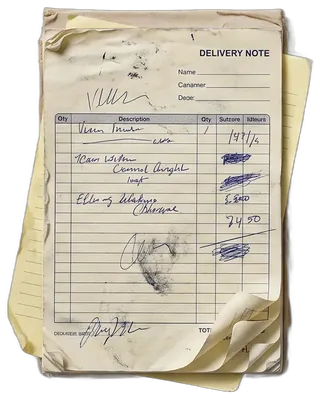
We analyze how work is currently performed and identify inefficiencies and bottlenecks.
ResultA sketch of today's workflow: who does what, when, and with which tool.
Thalassa Consulting Kft. · Registered office Budapest · Service area: Baden-Württemberg and DACH (remote)
Thalassa Consulting Kft. has two business divisions: we advise industrial SMEs on process optimization and automation – and we develop our own AI software, Thalassa Assistant and Bewero.
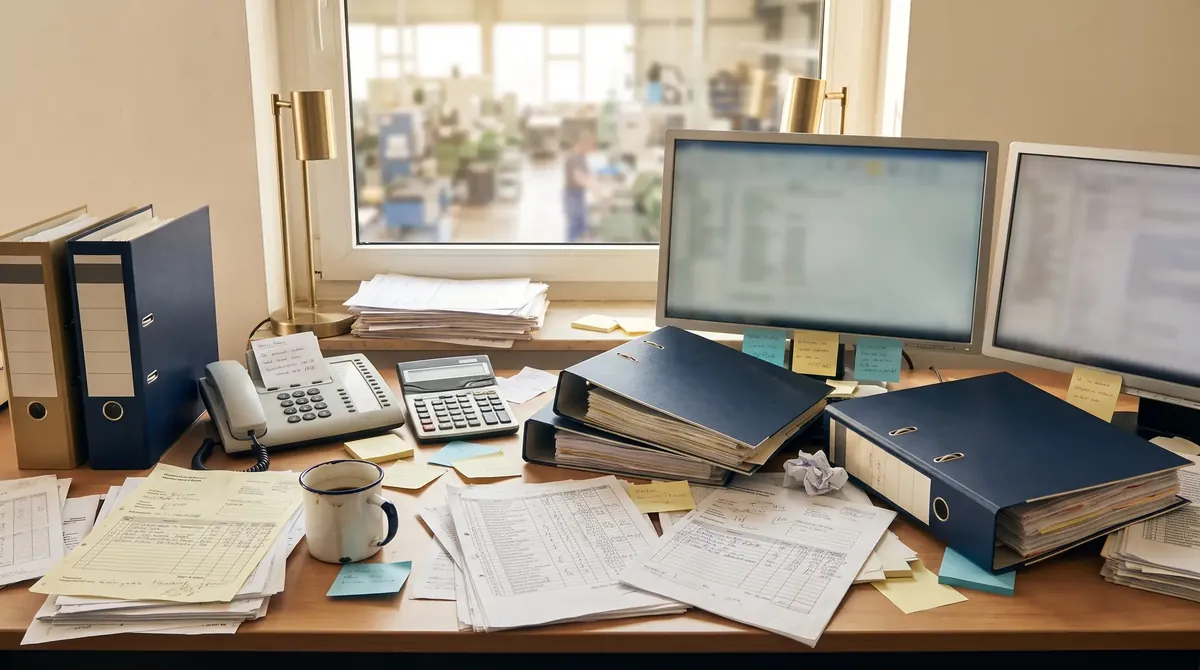
Every day. Between email, Excel and ERP.
An ordinary inside sales workstation. The problem is rarely the people – it is the process. Symbolic image
Starting point
In many industrial companies, a significant part of daily work is still manual. Data is transferred between systems, emails are answered individually, and information is maintained in multiple places.
These structures often appear stable, but they lead to a gradual loss of efficiency. Errors increase, processes slow down, and knowledge remains tied to individuals instead of being part of a structured system.
Typical starting points in industrial SMEs:
The core issue is rarely the technology — it is the lack of structure in how processes are defined and executed.
Services
Our services focus on improving internal processes. No replacing of existing systems — better utilization and clearer workflows.
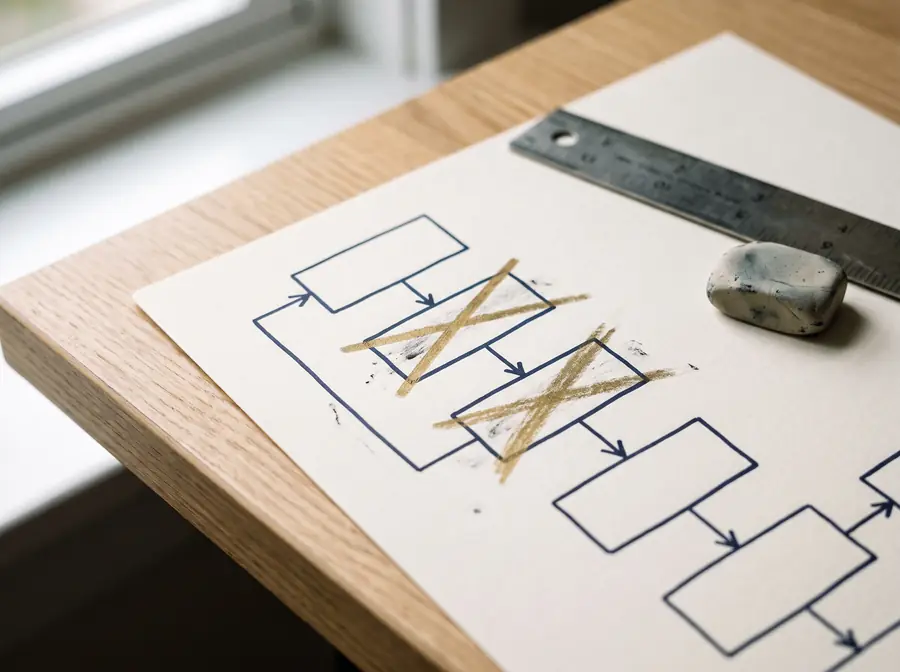 Process Optimization
We analyze existing workflows, identify inefficiencies, and restructure processes into clear, manageable steps.
Learn more →
02 · Automation
 Automation Implementation
Repetitive tasks are partially automated where it creates measurable value — without introducing unnecessary complexity.
Learn more →
03 · Communication
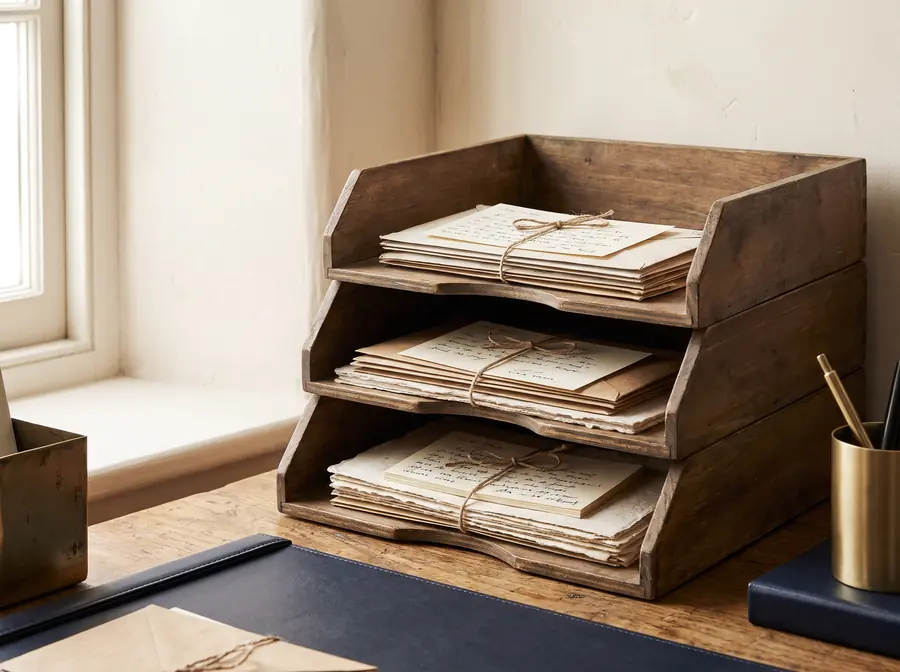 Communication Workflows
Recurring communication processes are structured and standardized to reduce delays and misunderstandings.
Learn more →
04 · Integration
 Workflow Integration
Existing systems such as ERP, CRM, Excel, and email are connected through clear data flows to eliminate manual transfers.
Learn more →
Who we work with
We work with industrial companies that have established operations — but know these could be more efficient.
[ What this is really about ]
The best process is the one nobody talks about anymore.
Four steps lead there.
How it works
Methodology
No large transformation projects. We work in a structured, step-by-step manner — starting with concrete improvements to one workflow.
01
We analyze how work is currently performed and identify inefficiencies and bottlenecks.
ResultA sketch of today's workflow: who does what, when, and with which tool.
02
Processes are clearly defined, responsibilities are assigned, and workflows are standardized.
ResultClear steps and responsibilities that everyone involved knows.
03
Unnecessary steps are removed and processes are reduced to what is actually required.
ResultA leaner workflow with fewer handovers.
04
Repetitive and structured tasks are automated where it creates measurable value. Review and decisions remain with people.
ResultAutomated sub-steps in your existing systems.
The example workflow in figures
How the workflow from the graphic above changes: from the customer inquiry to the scheduled order.
Example from the methodology graphic, not client results
Example Scenarios
Four scenarios based on typical starting points in industrial companies.
Illustrative scenarios, not client projects.
Illustrative scenarios, not client projects.
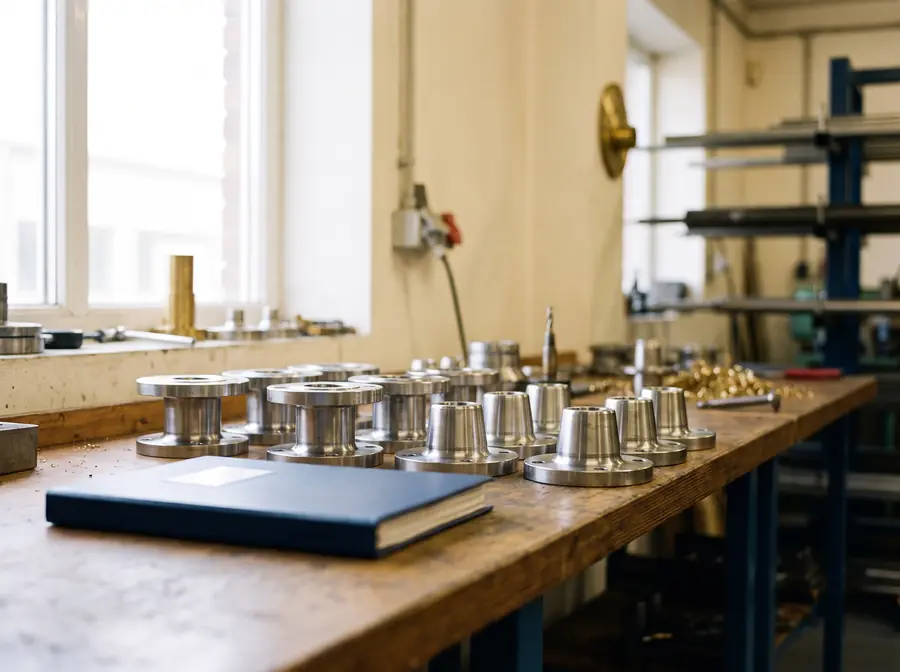
Mechanical Engineering Supplier
Starting point
Quotations are created manually with Excel and copy-paste – with high effort and a risk of errors.
Approach
Structure the quotation logic and partially automate quotation creation.
Illustrative scenarios, not client projects.
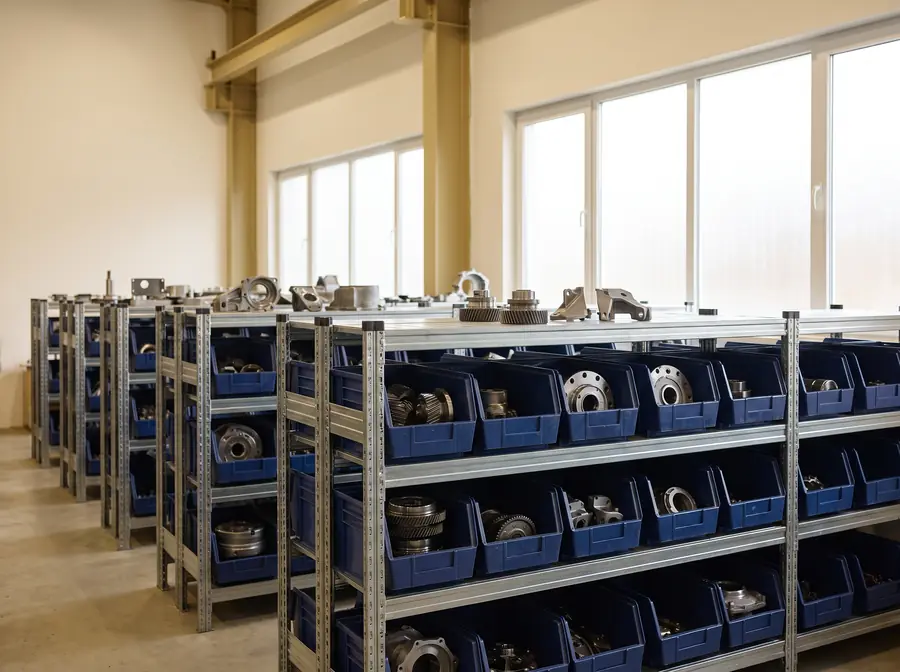
Automotive Supplier
Starting point
Unstructured customer communication leads to overlooked requests and high coordination effort.
Approach
Classify incoming requests, route them automatically and make their status visible in one place.
Illustrative scenarios, not client projects.

Metal Processing
Starting point
Order data is transferred manually – time-consuming and error-prone.
Approach
Extract order data from emails and PDF documents and create orders directly in the ERP.
Illustrative scenarios, not client projects.
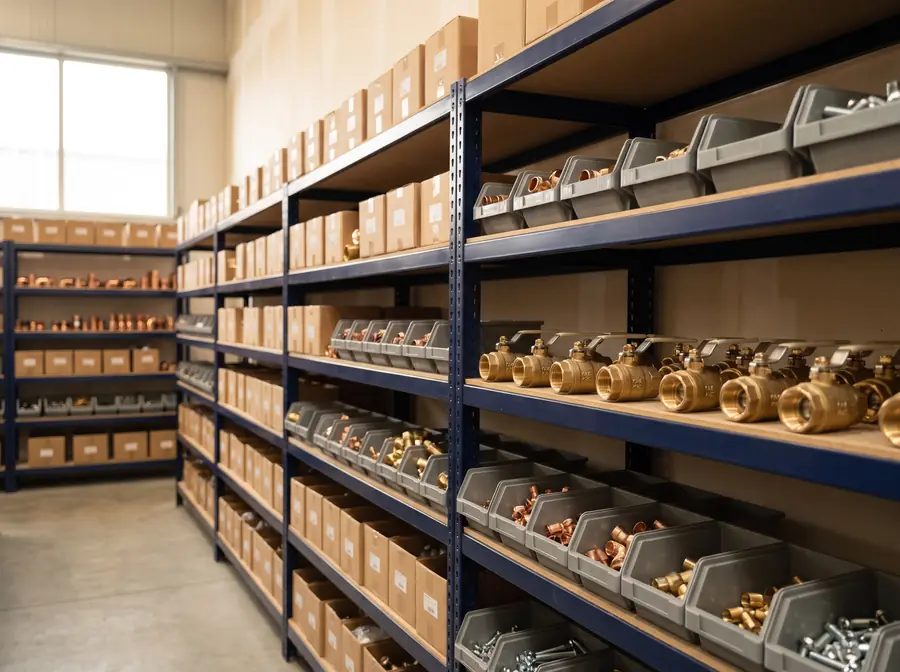
Technical Wholesale
Starting point
A high volume of recurring customer inquiries ties up the sales team.
Approach
Answer standard inquiries with a digital assistant; complex requests stay with inside sales.
Our Approach
The focus is not on introducing new systems, but on improving how existing processes are structured and executed.
Most improvements come from simplifying workflows, reducing unnecessary steps, and creating clear data flows — not from large IT projects.
What is not part of our services


The same people, the same systems. What changes is the path an inquiry takes. Symbolic image
Frequently asked questions
What management, sales and purchasing usually want to know before the first conversation.
In 20–30 minutes, we assess whether one of your core processes has a relevant need for action. We then respond with a concrete next step — without obligation.
No. No replacing of existing systems — better utilization and clearer workflows. ERP, CRM, Excel and email are connected through clear data flows.
Depending on the requirement, we use workflow tools such as n8n, no-code automation, and RPA (Robotic Process Automation) — and only where it creates measurable value. Review and decisions remain with people.
No large transformation projects: specific processes are selected and improved individually. Based on initial success, improvements are extended to other areas.
Consulting is delivered remotely and, by arrangement, on site in Baden-Württemberg.
Data-minimal: as little data as necessary, for as short a time as possible. Information from inquiries is used only to process the request. Details are in our Privacy Policy.
Usually a personal reply within 1–2 business days.
How Thalassa is structured
Whether it is a customer inquiry, a résumé or a conversation note: our work revolves around documents, conversations and the workflows in between. In consulting, we structure them together with companies. In our software, we make them simpler for many people.
Our principles
Next step
We will review it and respond with a structured next step.